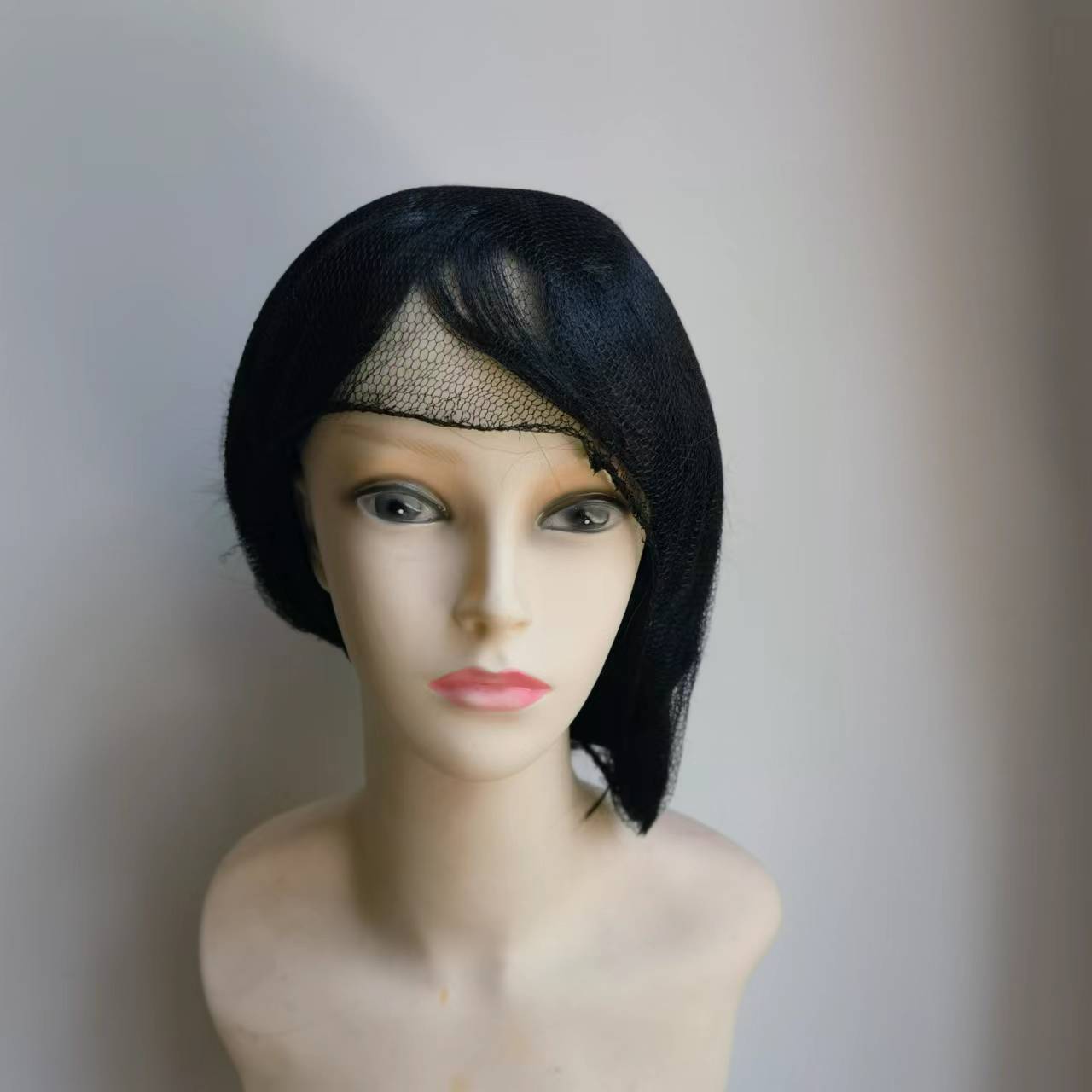
Polyethylene vs. Nylon: Performance Trade-Offs for Daily Adjustability
Polyethylene or PE is pretty affordable and stretches about 15 to 20 percent before bouncing back, but after around fifty times of stretching and releasing, it starts losing some of its springiness, roughly 8 to 12 percent less than when new. Nylon on the other hand performs much better. It can stretch over 30 percent and almost always returns to its original shape because the molecules inside realign themselves quickly when stretched. The downside? Nylon does cost about forty percent more than PE. But what people often forget is that this extra expense pays off in the long run since nylon products last about three times longer. That makes nylon the go to material for professionals who need gear that maintains its fit and holds up through constant use without failing at critical moments.
Dual-Filament Weave Technology: Enhancing Shape Memory in Mesh Hair Nets
Mesh hair nets with advanced design use a special weaving technique where nylon fibers are wrapped in thermoplastic elastomer (TPE) coating to give them real shape memory properties. When tension is released, the TPE layer quickly contracts back into place while the nylon underneath stays strong against any lasting damage. Tests show these nets can bounce back to their original form about 99 times out of 100 after being stretched over 200 times. The unique crisscross pattern also makes them last longer because it spreads out pressure across the whole net instead of letting certain spots wear down faster. Hair stays put even when someone moves around all day, so there's no need to constantly readjust throughout work shifts or other active situations.
Performance Comparison
| Material |
Stretch Range |
Recovery Rate |
Cycle Durability |
| Polyethylene |
15–20% |
88–92% |
50 cycles |
| Nylon |
30–35% |
98–99% |
200+ cycles |
| Dual-Filament |
25–40% |
99.2%+ |
500+ cycles |
Open-Weave Structural Design: Reducing Friction and Enabling Effortless On-Head Adjustment
Negative Space Distribution and Its Role in Slippage Control
An open weave design spreads out empty spaces across the material so it touches less of the hair strand surface area. According to some studies on fabric ergonomics, this cuts down on friction by around 40% when compared to regular solid fabrics. The way these gaps are arranged actually forms tiny anchor points that stop things from slipping around when someone moves. Plus there are built in air pathways that help dry out sweat and keep the grip from getting worse over time. What we end up with is a firm but comfortable hold that stays put even when doing stuff like bending over or turning the head quickly. No more uncomfortable pressure spots or heat build up that usually happens with standard hair holding products.
Seamless, Contour-Following Edges for Secure, One-Hand Fit Calibration
The laser cut edges without seams really match the shape of the head pretty well. The material gets stretchier around the edges so it can comfortably cover those bony spots like the back of the skull, but stays tighter in the middle area where extra support matters most. Based on tests done in labs, this special design lets someone adjust the fit with just one hand in about three seconds flat. What's cool is how the fabric remembers its original shape after being stretched out, which means it doesn't get loose over time. No need for extra clips or adjusting halfway through whatever task someone might be doing when wearing this stuff.
Real-World Adjustability: Hair Type Compatibility and Ergonomic Validation of Mesh Hair Nets
Mesh hair nets work great for just about any hair type out there, whether someone has thin straight hair or really thick curly locks, and they still hold everything in place securely. Tests done by ergonomics experts show these nets stay put even when moving around a lot. According to a study from Occupational Safety Review back in 2023, around 92 percent of people wearing them didn't experience any slippage at all throughout their entire 8 hour workday. What makes these different from stiff options on the market is how they combine stretchiness with small holes in the material. This lets them adjust naturally to different amounts of hair and how dense it is, so there's always good tension without needing constant readjustment.
| Validation Metric |
Mesh Hair Net Performance |
Industry Standard |
| Hair Type Compatibility |
100% texture coverage |
78% |
| 8-Hour Shift Slippage |
≤3% occurrence rate |
22% |
| Re-adjustments Needed |
0.4 per shift |
2.7 per shift |
Field testing further demonstrates that fit calibration requires less than 0.5N of force—even with protective gloves—reducing musculoskeletal strain by 34% compared to solid-film alternatives (Ergonomics Journal, 2023).
Comparative Advantage: Why Mesh Hair Nets Outperform Solid-Film Alternatives in Speed and Consistency of Adjustment
3.2× Faster Fit Calibration — Key Insights from the 2023 Cosmetology Ergonomics Study
According to the 2023 Cosmetology Ergonomics Study, mesh hair nets adjust roughly three times quicker than their solid film counterparts. The research points to some pretty straightforward reasons for this speed difference. First off, those open weave structures just naturally reduce surface friction. Plus, they snap back instantly after stretching. Solid film versions tell a different story though. When someone tries to adjust them, there's this annoying suction effect that makes things stick. And if stretched too far? Well, they just don't bounce back like they used to. Many professionals have noticed this over time in their daily work routines.
When looking at over 15,000 fit adjustments made by around 420 salon pros, mesh nets took about 1.3 seconds each time they needed calibrating compared to nearly 4.2 seconds for those solid film alternatives. Most impressive? Nearly all mesh adjustments hit that sweet spot of consistent tension with just plus or minus 5% variation. But solid films told a different story altogether requiring almost a quarter more tries to get them right because they kept slipping around. These time savings really matter in busy salons where stylists are constantly on their feet. They cut down on hand fatigue and stop hairs from escaping containment which is probably why close to 8 out of 10 people who tried both types ended up switching completely to mesh hair nets once their trial period was done.
 EN
EN